


One in Three Customers Will Never Google You. Here's Where They Went
One in Three Customers Will Never Google You. Here's Where They Went
Search didn't die. It moved into the feed, and most brands haven't followed it.
It's 9:40 on a Thursday night in Beirut. Maya wants a new sunscreen before her trip to Dubai. A few years ago, she'd have typed "best sunscreen for oily skin" into Google, opened six tabs, and skimmed through listicles written for everyone and no one.
Tonight, she opens TikTok.
In under four minutes she's watched a dermatologist break down three formulas, a creator test one in 40-degree heat, and a girl from Riyadh show how it looks under makeup. She reads the comments, saves two videos, and taps the link in bio.
She never opened Google. And the brand that had spent its entire budget ranking there? It never got the chance to be considered.
Maya isn't an exception. She's the new normal.
The Search Bar Moved, and It Brought Video
For two decades, "search" meant one thing: a white page, a blinking cursor, and ten blue links. That habit is breaking fast.
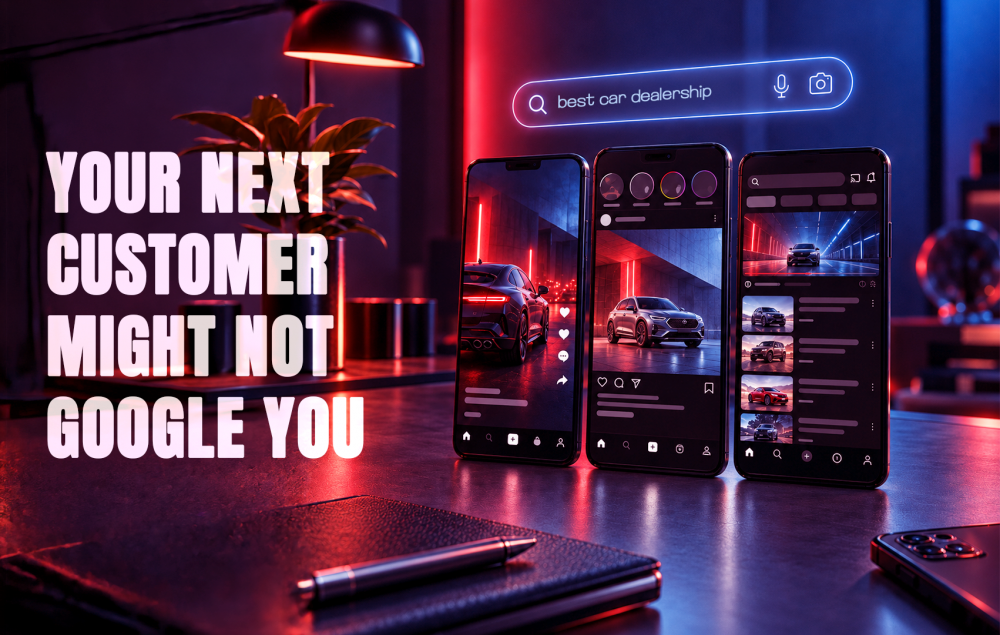
According to a 2025 survey by Sprout Social, nearly one in three consumers now skip Google entirely and begin their search on TikTok, Instagram, or YouTube. For Gen Z, social has already taken first place: 41% turn to social media first when looking for information, compared to 32% who go to Google.
And it goes beyond curiosity. It's about buying. The same research found that 37% of consumers of all ages now go to social platforms first for product reviews and recommendations.
Read that again. More than a third of your potential customers are forming opinions about your product before they ever see your website.
Why People Trust a 30-Second Video Over a Website
The question isn't why people moved. It's obvious once you think like a customer.
They want to see it, not read about it. A video shows the texture of the cream, the legroom in the SUV, the view from the hotel balcony. No product description can compete with proof.
They trust people more than brands. When people are researching a purchase, they skip the glossy campaigns and go looking for real faces and honest opinions. A real person saying "I tried this for a month" beats a perfectly lit banner every time.
The comments are the real reviews. On social, the second opinion is built in. Scroll down and you'll find 400 people agreeing, arguing, or asking the question you were about to ask.
It's faster. One short video can answer what used to take five tabs and ten minutes.
Each Platform Plays a Different Role in the Search Journey
Think of them less as competitors and more as stages in a single decision.
TikTok is the spark. It's the place for fast tips, quick demos, and "you need to try this" moments, where people watch a product in action before they even think about buying it.
Instagram is the showroom. It's where people check whether a brand looks legit, browse the grid, tap through Highlights, and slide into DMs to ask about price. For many users, it's the app that introduces them to the brands they end up buying from.
YouTube is the deep dive. When the decision gets serious, people want the long version. Before someone commits to a car, a property, or a big-ticket appliance, they want the 12-minute review, not the 12-second one.
Think back to Maya. A Reel might have planted the idea, TikTok gave her the reviews, and if she'd been buying something bigger, YouTube would have delivered the full walkthrough before she checked the price and bought. If your brand only shows up at one of those stops, you're missing most of the conversation.
What This Means for Brands
In our region, this shift is amplified. The MENA audience is young, mobile-first, and deeply social. People here already ask for recommendations on Instagram before they ask their friends. They DM brands asking "how much?" rather than filling out a contact form. They trust the cousin, the creator, and the comment section.
So, if your social pages are still treated as a place to post "Happy Friday" graphics and product photos, you're effectively invisible on the search engines your customers actually use.
How to Get Found When Your Customer Searches in the Feed
The good news: social search rewards brands that are useful, not just brands with the biggest budgets. Here's where to start.
- Speak the language people actually search in. Nobody searches "premium luxury hydration solution." They search "best moisturizer for dry skin" or "أفضل كريم للبشرة الجافة." Both Instagram and TikTok read your captions and even listen to your audio, so the exact words you use decide whether you appear in results. In our region, that means thinking in Arabic, English, and the dialect mix people really type.
- Say your keywords out loud. Put the key phrase in the first seconds of your video, in the on-screen text, and in the caption. The algorithm is listening, literally.
- Optimize your profile like a landing page. Your bio, Highlights, and pinned posts should instantly answer: what do you sell, who is it for, and how do I get it? Keywords placed there act like signposts that lead searchers to your page.
- Answer real questions with real content. Look at your DMs and comments. Every repeated question is a video waiting to be made. "Does it come in black?" "Is it available in Jeddah?" "How is it different from X?" Those are your search queries.
- Put people in front of the camera. Founders, staff, customers, creators. Faces build trust faster than logos.
- Think in series, not one-offs. A recurring format ("Myth vs. Fact Mondays," "Showroom Walkthroughs," "Customer Asked Us...") trains both the audience and the algorithm to know what you're about.
- Don't abandon Google, connect it. Google still wins at the final step, when someone is ready to buy and searching for a specific name or price. Social wins the earlier stage, when they're still exploring. The strongest strategy covers both.
The Brands That Win Will Be the Ones That Get Found
Here's the uncomfortable truth: your next customer may already be searching for exactly what you sell. The only question is whether they'll find you, or the competitor who figured this out first.
Social media is no longer just where people scroll to kill time. It's where they search, compare, trust, and decide.
At Smartest Media, we build social strategies designed for how people search today: keyword-driven content, multilingual captions that sound native, profiles that convert, and video formats that the algorithms love to surface.
Ready to show up where your customers are actually searching? Let's talk.